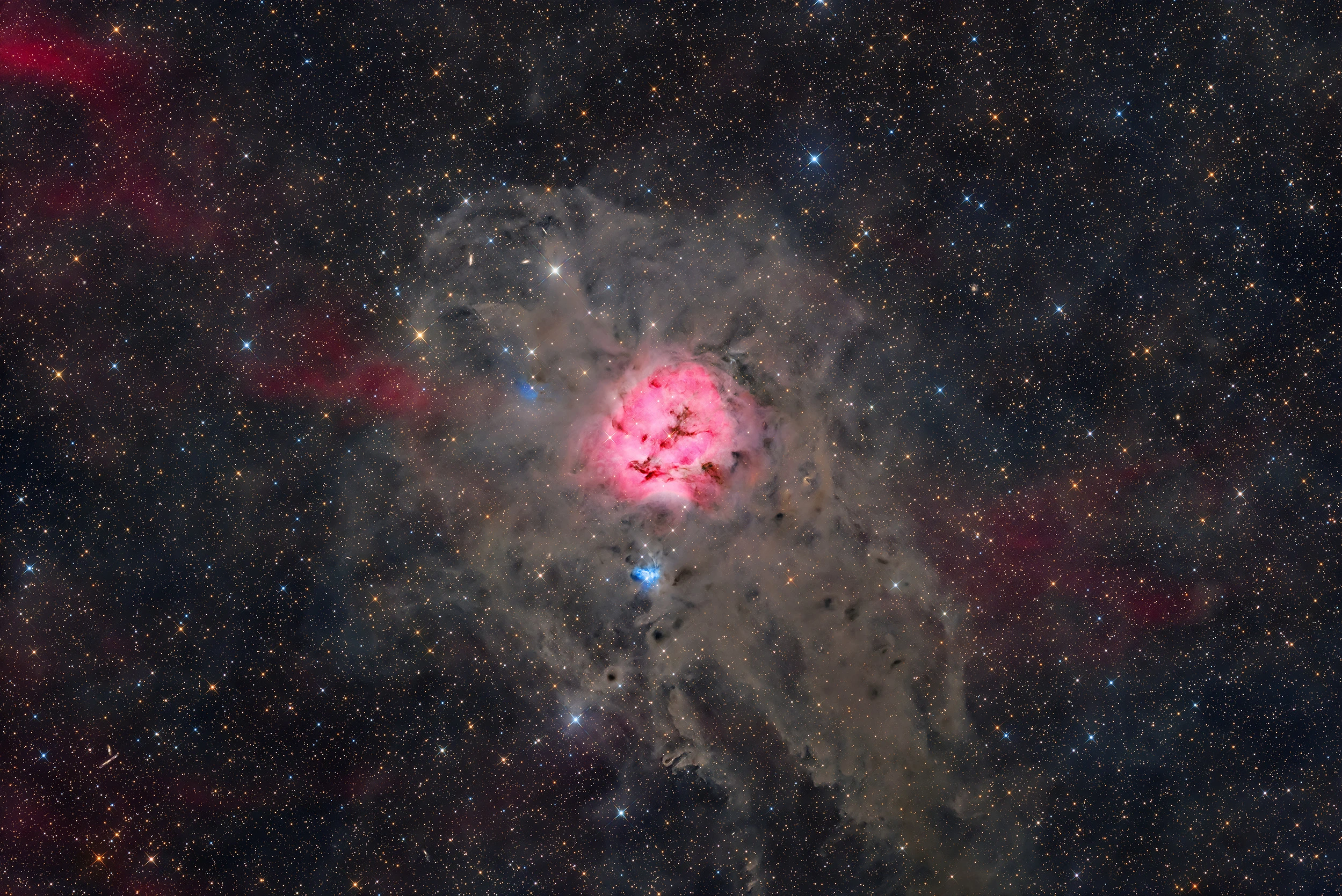
IC 5146 Cocoon Nebula and Surrounding IFN
- Type
- Nebula
- Acquisition
- Sky Rover 130mm APO Pro · QHYCCD QHY268 M
- Integration
- 80h
IC 5146 Cocoon Nebula and Surrounding IFN
The Cocoon Nebula is located in the constellation Cygnus, approximately 3,000 to 4,000 light-years away from Earth. This nebula spans about 15 light-years in diameter and is an active star-forming region. The young star cluster within the Cocoon Nebula, known as Collinder 470, is gradually clearing away the surrounding gas and dust. The intense radiation emitted by these young stars causes the surrounding hydrogen gas to glow with a reddish hue.
This nebula exhibits characteristics of emission, reflection, and absorption nebulae. Its emission region glows due to the radiation from excited hydrogen gas, while its reflection region is caused by starlight scattering off interstellar dust. Extending from the Cocoon Nebula is a dark dust lane known as Barnard 168, adding to its complexity and mysterious appearance in images.
Skyrover 130 APO Pro
QHY 268m
iOptron CEM120
Optolong LRGBHa
LRGB-50hrs, Ha-30hrs,
Total integration time: 80hrs