AstroBin Image of the Day
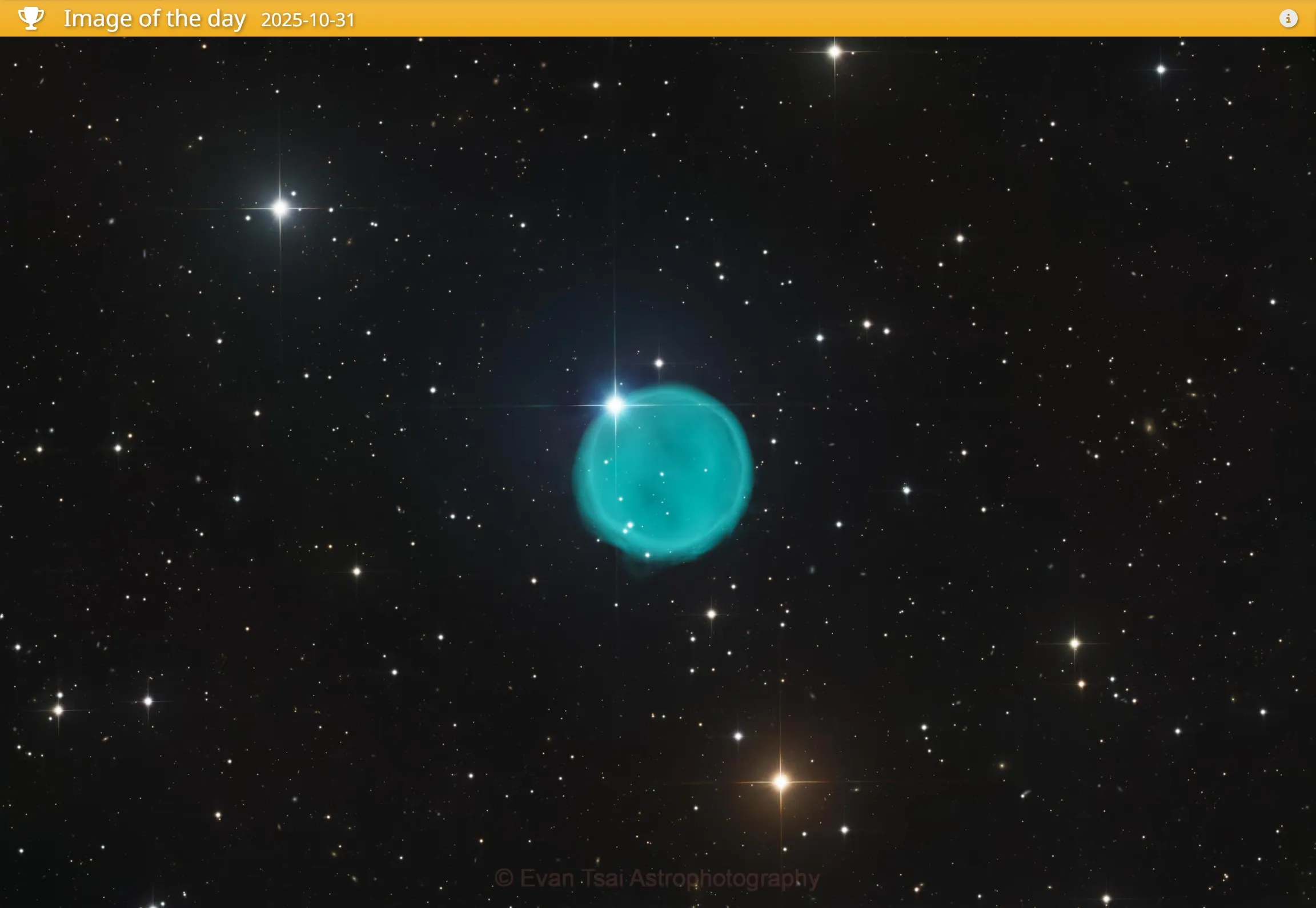
Abell 33 — The Cosmic Diamond Ring
It looks like a ring left behind by something vast — a perfect teal circle of light adrift in the darkness, with a single star resting on its rim like a diamond set into a band of light.
Abell 33 is a planetary nebula: the exhaled remains of a dying star, expanding over thousands of years into a glowing shell of gas. The "diamond" is a coincidence of sightlines — an unrelated foreground star that happens to align perfectly with the nebula's edge from our vantage point on Earth. Yet it is precisely this kind of coincidence that makes a lifetime of looking up worthwhile.
This image was captured remotely from the El Sauce Observatory in Chile with a Planewave CDK20, gathering more than 27.5 hours of starlight. On October 31, 2025, it was selected as AstroBin's Image of the Day (IOTD).
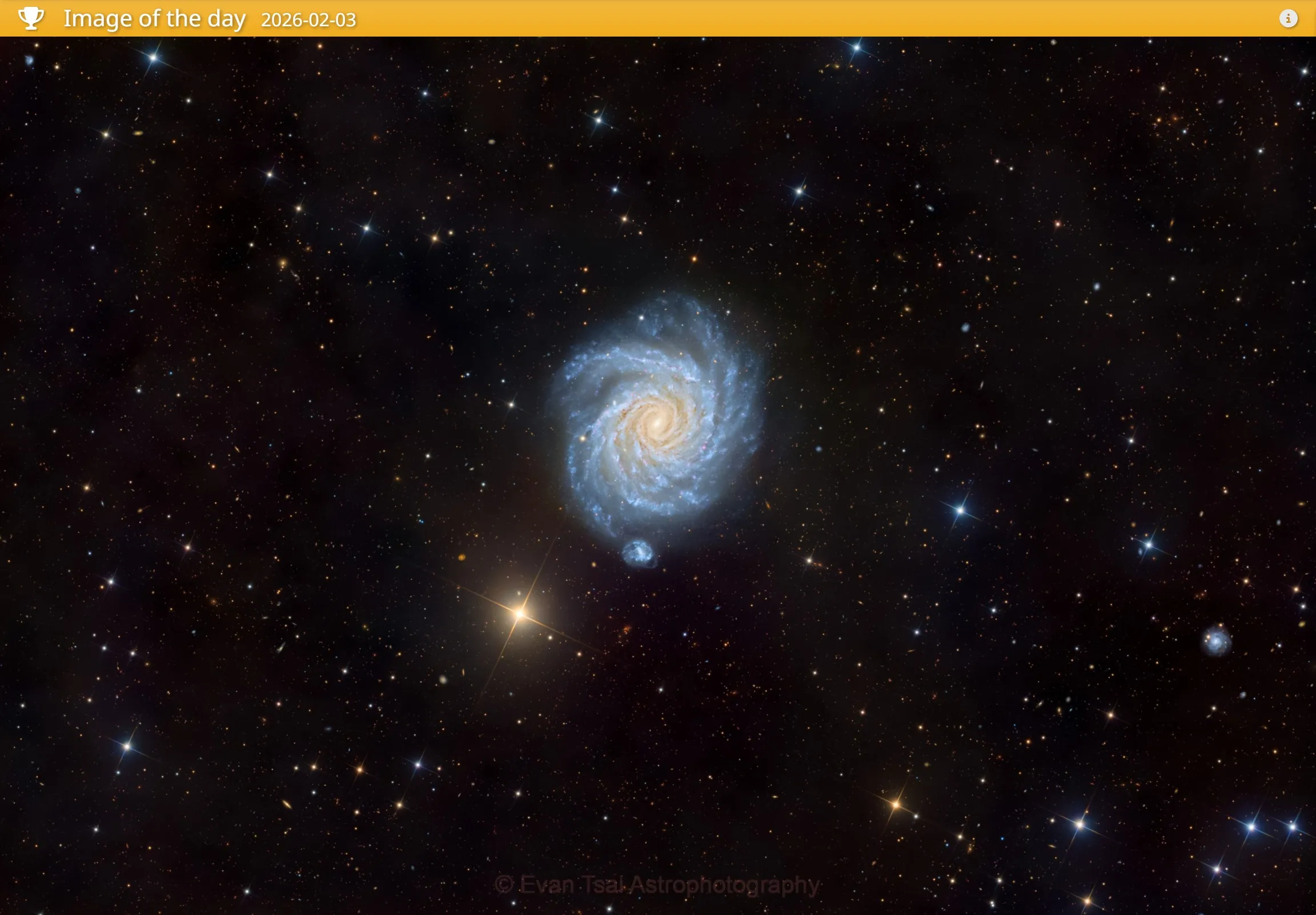
NGC 1232 — The Eye of God Galaxy
Fifty million years ago, the light in this image left its source. It crossed the void between galaxies and, over four consecutive nights in December 2022, finally reached a telescope in the Chilean desert.
NGC 1232 is a face-on spiral galaxy in Eridanus — close enough for its spiral arms to be resolved, yet far enough to convey the sheer scale of the cosmos. The blue arcs tracing its arms are cradles of newborn stars; the warm golden core has burned for billions of years. Along the lower edge of the frame, the companion galaxy NGC 1232A twists into the shape of a letter, as if the universe were trying to say something.
This image was selected as AstroBin's Image of the Day (IOTD) on February 3, 2026, built from more than 22 hours of exposure with the Planewave CDK17 at the El Sauce Observatory in Chile.
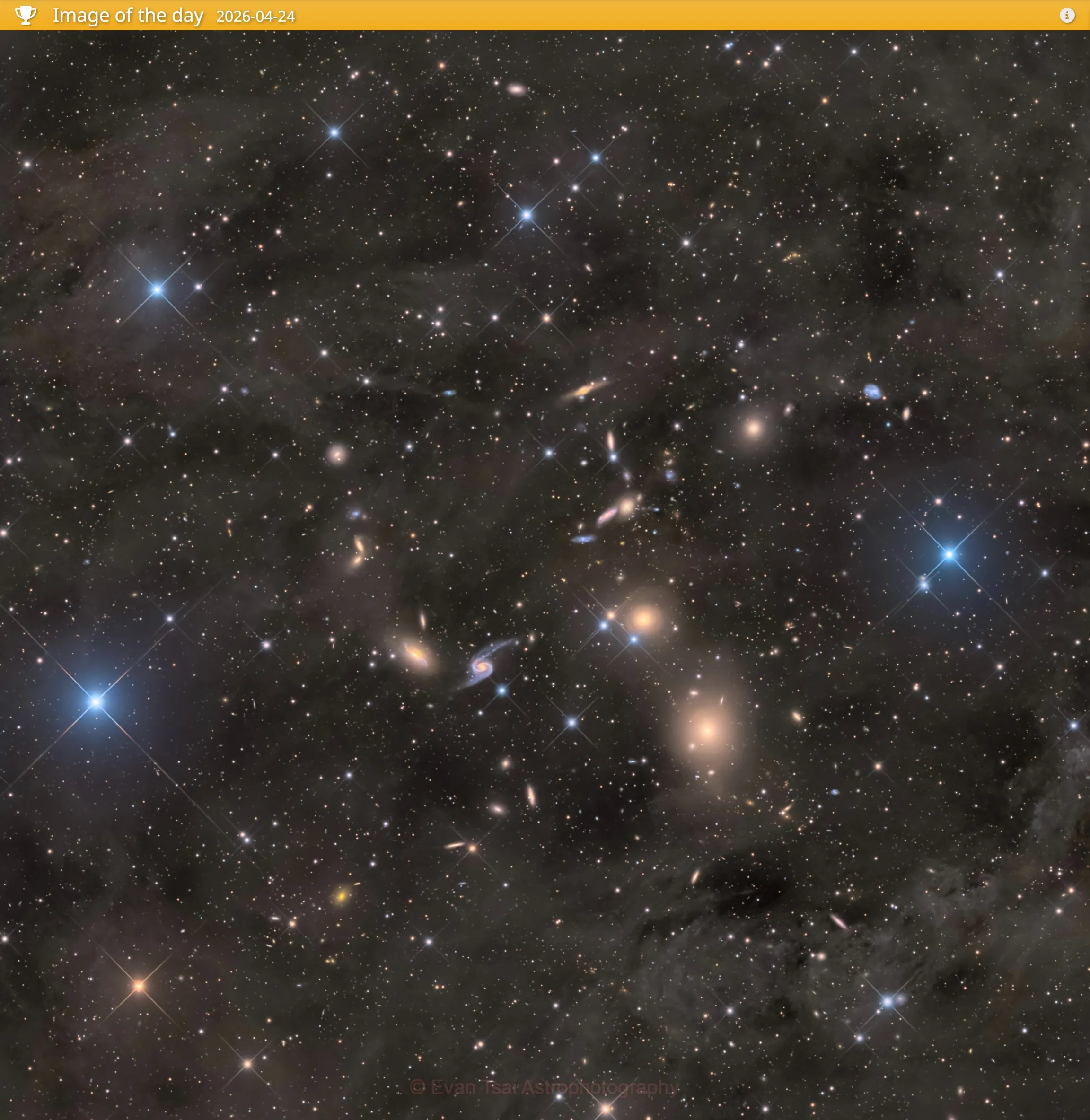
Arp 65 — A Gravitational Waltz Across Spacetime
Two hundred and thirty million years ago, the light in this image left a pair of interacting galaxies in the direction of Andromeda, crossed the long emptiness of intergalactic space, and finally arrived at a telescope beneath the Chilean night sky.
Arp 65 consists of NGC 90 and NGC 93, a pair in the early stages of a merger. Gravitational tides tug at the spiral arms of NGC 90, drawing them into bright, fragmented knots; the blue-white clusters of newborn stars within them record the burst of star formation ignited by this galactic encounter. This is more than two galaxies drawing close — it is a fragment of cosmic history, a story of structures reshaped and galaxies evolving.
This image was selected as AstroBin's Image of the Day (IOTD) on April 24, 2026, assembled from roughly 11.5 hours of exposure at an observatory in Chile.