本站提供正體中文版。切換到正體中文本站提供简体中文版。切换到简体中文このサイトには日本語版があります。日本語で表示이 사이트는 한국어로도 제공됩니다.한국어로 보기Diese Website ist auch auf Deutsch verfügbar.Auf Deutsch ansehenEste sitio web también está disponible en español.Ver en españolQuesto sito è disponibile anche in italiano.Visualizza in italianoCe site est également disponible en français.Afficher en françaisEste site também está disponível em português.Ver em portuguêsDeze website is ook beschikbaar in het Nederlands.In het Nederlands bekijkenЭтот сайт также доступен на русском языке.Смотреть на русскомयह वेबसाइट हिन्दी में भी उपलब्ध है।हिन्दी में देखेंهذا الموقع متاح أيضًا باللغة العربية.عرض بالعربيةSitus ini juga tersedia dalam bahasa Indonesia.Lihat dalam bahasa IndonesiaBu site Türkçe olarak da mevcut.Türkçe görüntüleTa strona jest dostępna także po polsku.Wyświetl po polskuTrang web này cũng có phiên bản tiếng Việt.Xem bằng tiếng Việtاین وب‌سایت به فارسی هم در دسترس است.مشاهده به فارسی
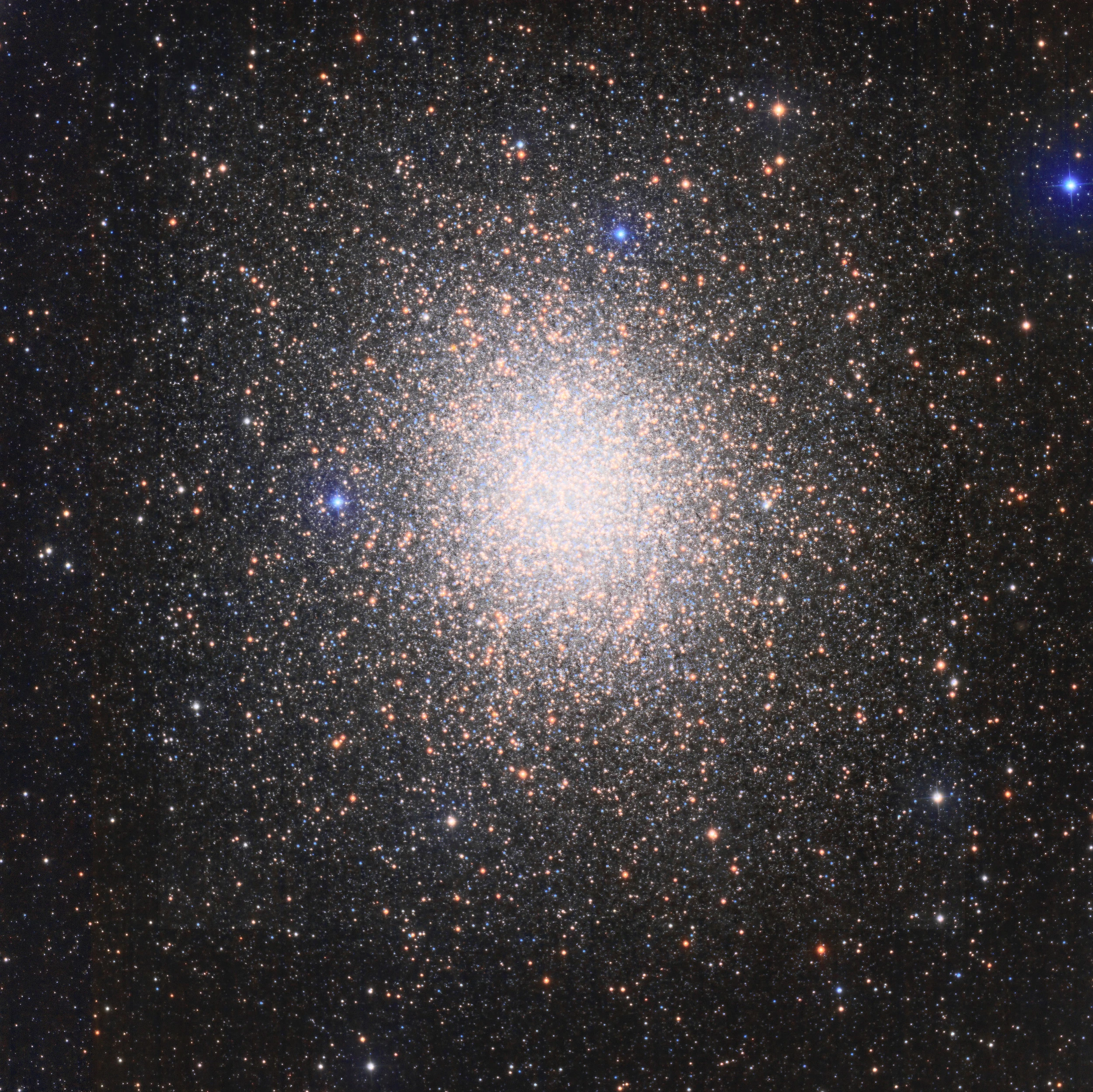
NGC 5139 Omega Centauri

NGC 5139 Omega Centauri

2023
Type
Cluster
Acquisition
FLI ML16803
Integration
1.5h

NGC 5139 Omega Centauri

The brightest globular cluster in the entire sky. This image was taken years ago, when I was just getting into long-focal-length imaging and did not yet appreciate how much seeing matters at long focal lengths. None of the four channels got much exposure time, and the seeing was atrocious — so a globular cluster, whose whole appeal lies in its pinpoint stars, turned into a blur. Zoomed in, the star sizes differed between channels and the centers never quite registered; back then the processed result was simply unpresentable.

But it is 2023 now. Running BlurXTerminator experimentally actually straightened out those crooked, smeared stars. The result still cannot match what a good dataset would give, but for 90 minutes of data, this will do.

iTelescope T32
LRGB 180"*30sec
Total integration time: 1h30m