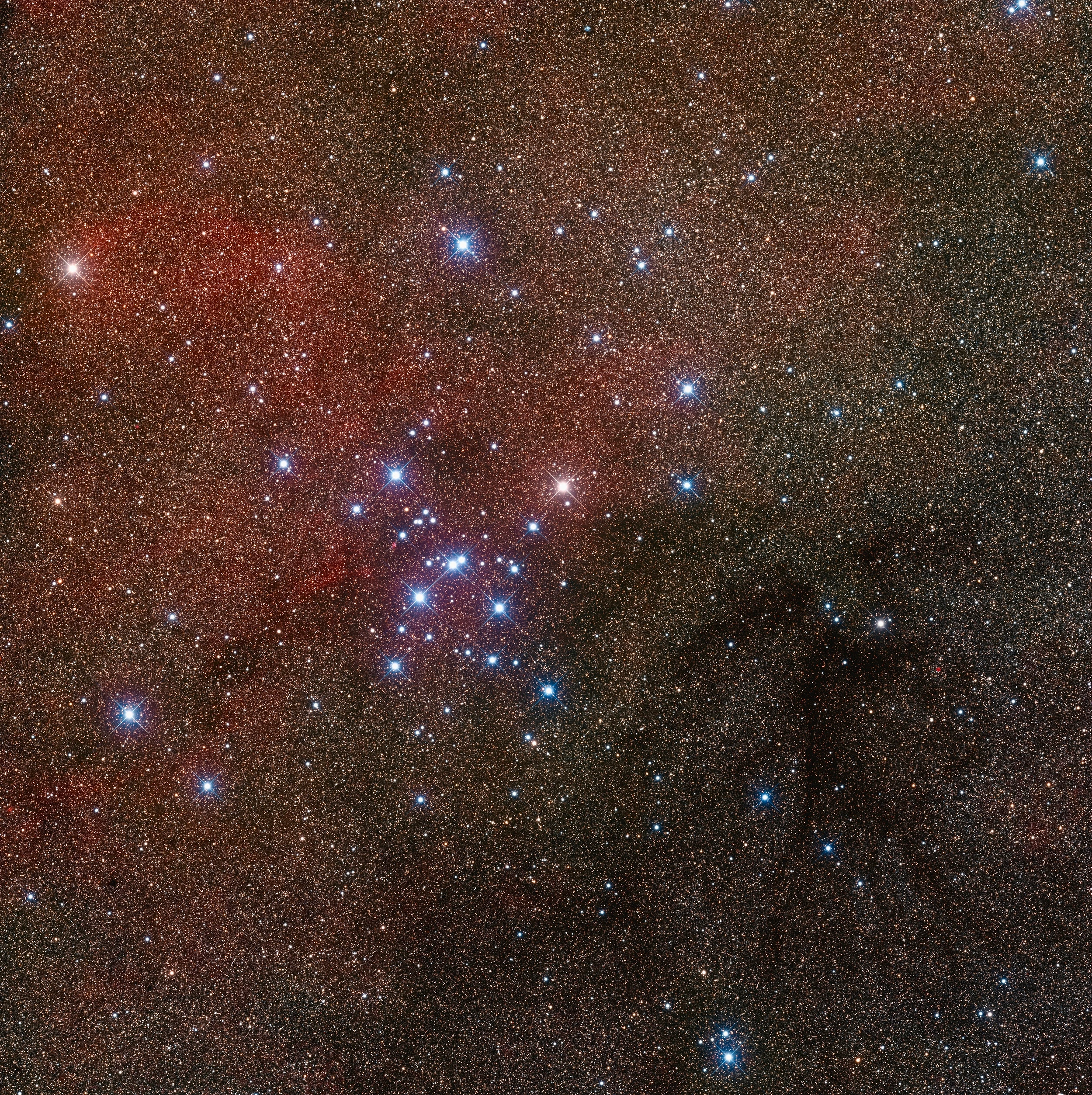
M7 Ptolemy's Cluster
- Type
- Cluster
- Acquisition
- ASA 500N · FLI ML16803
- Integration
- 3.7h
The M7 Cluster, also known as Ptolemy’s Cluster and designated NGC 6475, is a prominent open cluster located near the tail of the constellation Scorpius, about 980 light-years from Earth. It is bright enough to be seen with the naked eye and stands out clearly in the southern sky under good viewing conditions. Historical records of M7 date back to around AD 130, when it was first described by the Greco-Roman astronomer Ptolemy, from whom it takes its name.
The cluster spans about 1.2 degrees across the sky, corresponding to a true diameter of roughly 25 light-years, and contains about 80 stars brighter than 10th magnitude. Estimated to be around 220 million years old, most of its members have already evolved beyond the main sequence. Its brightest member is a yellow giant star with an apparent magnitude of 5.6.
ASA 500N
FLI Proline 16803
ASA DDM85
Astrodon 50mm RGBHa
Rx12, Gx12, Bx12,300s; Hax2, 1200s
Total integration time: 3h40m
Location: Chile