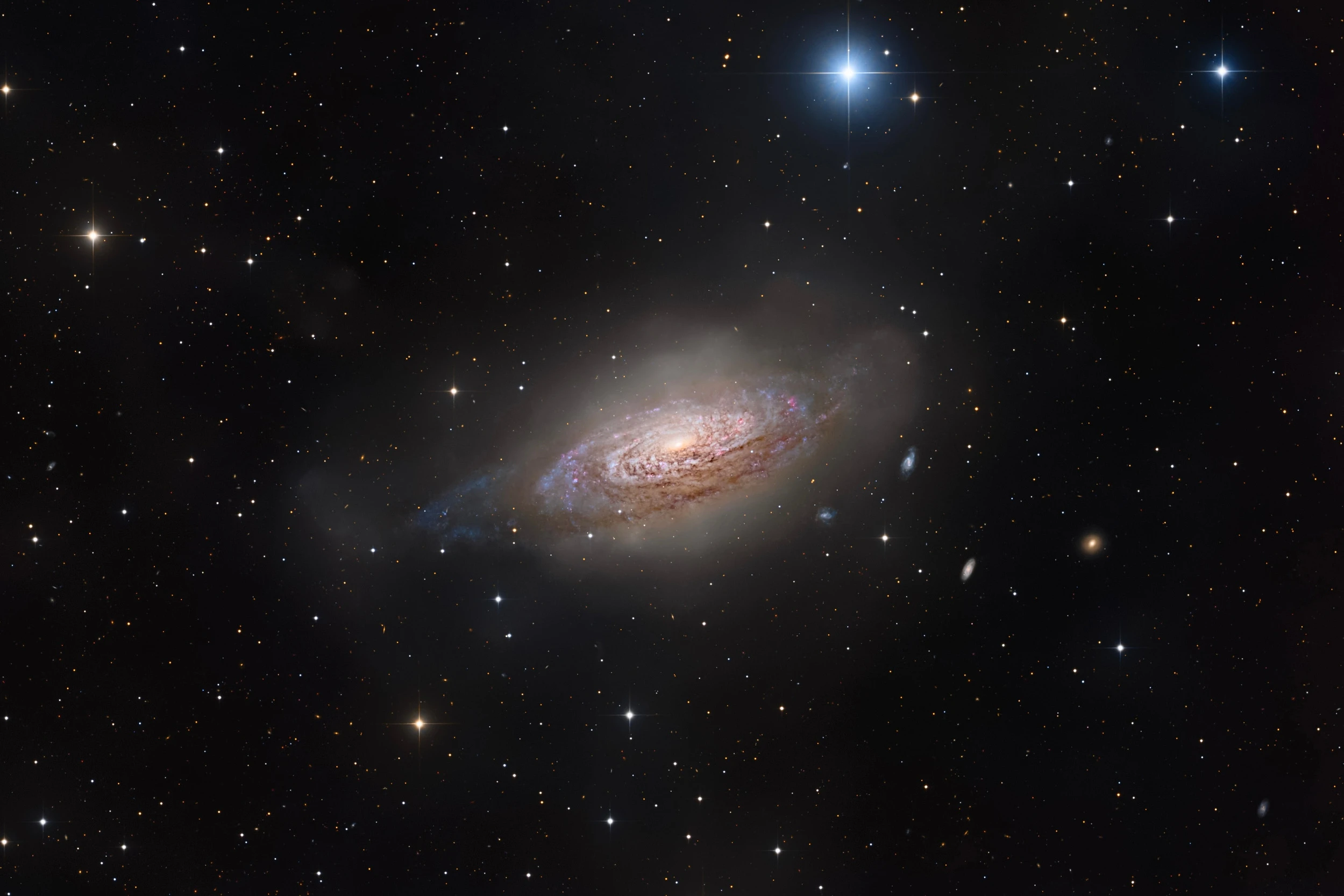
NGC 3521 Bubble Galaxy
- Type
- Galaxy
- Acquisition
- Planewave CDK17 · SBIG STXL-11002
- Integration
- 39.5h
NGC 3521, also known as the "Bubble Galaxy," is a flocculent spiral galaxy located in the constellation Leo, approximately 26 to 40 million light-years from Earth. Its spiral arms appear fragmented and irregular, filled with dust, pink star-forming regions, and clusters of young blue stars, giving it a "fuzzy" appearance. This structure sets it apart from grand-design spiral galaxies with well-defined arms. The core of NGC 3521 is classified as an HII LINER, indicating the presence of ionized hydrogen regions and low-ionization nuclear emission lines, which suggest active star formation in the central area.
Surrounding the galaxy is a faint, bubble-like shell structure, which may consist of tidal debris left behind by satellite galaxies that NGC 3521 has merged with in the past. These features make NGC 3521 a valuable subject for studying galaxy evolution and merger history. Although NGC 3521 is relatively bright in the night sky and can be observed with small telescopes, it is often overlooked by amateur astrophotographers in favor of more famous spiral galaxies in Leo, such as M65 and M66.
Planewave CDK 17"
SBIG STXL 11002 with AOX
Paramount ME
Astrodon 50mm LRGB
L30,R21,G22,B23 1200s
Ha15 BIN2, 1800s
Total integration time: 39.5hrs
Location: El Sauce, Chile
Software: PixInsight, Photoshop