Eight Years With an Electronic Kerosene Heater
I’ve been using an electronic kerosene heater for many years now. Unlike a traditional kerosene stove, it doesn’t easily burn incompletely and give off odors, nor does it require manual ignition the way some models do—it’s fully automatic, and energy-efficient.
The only bother is probably having to top up the kerosene periodically (lugging a fuel can down to CPC, Taiwan’s state oil company, to buy loose kerosene). But once you get used to it, there’s pretty much no going back to traditional electric heating or other methods.
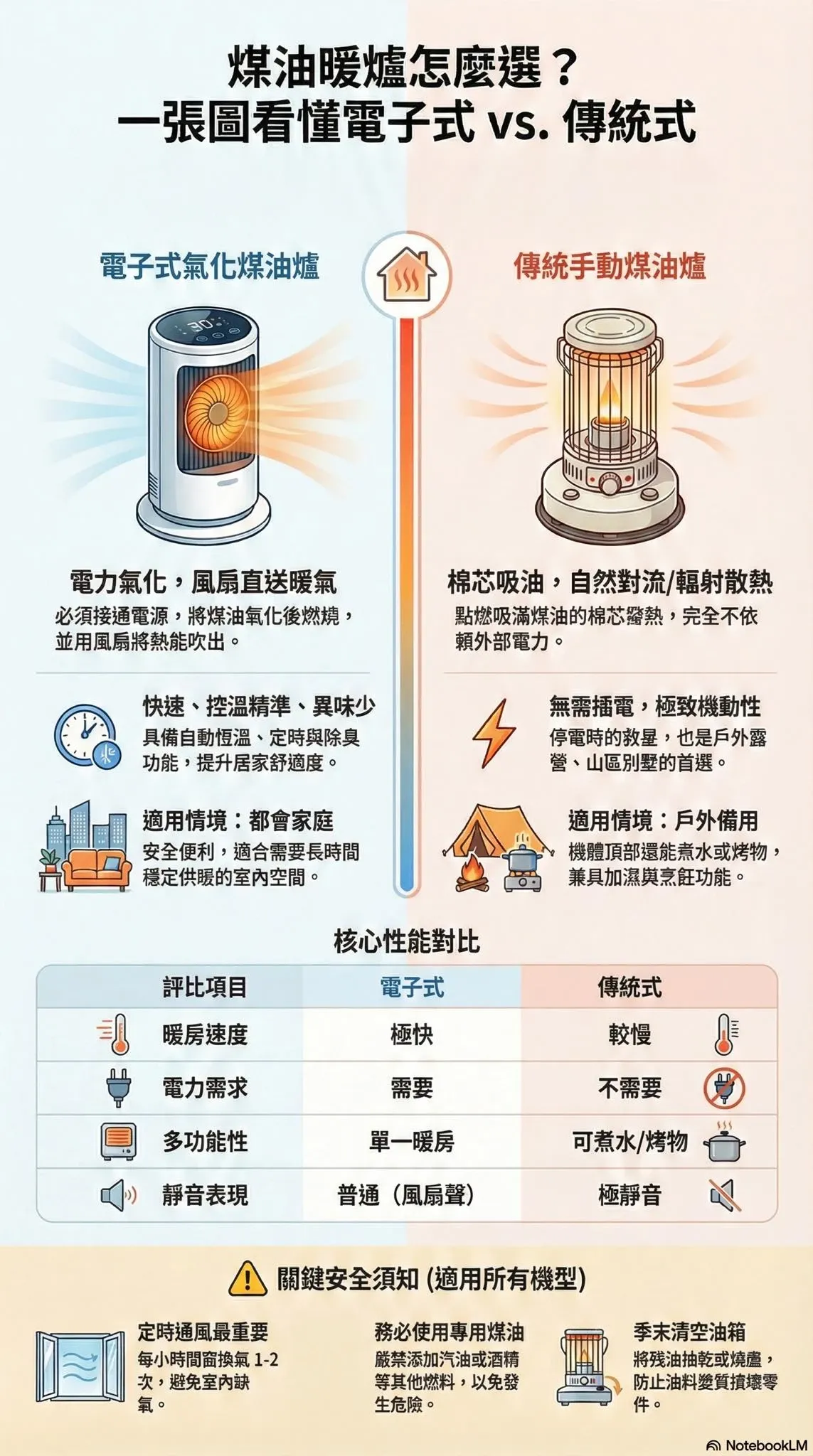
The Safety Mechanisms It Has Over a Traditional Kerosene Stove
Beyond being odorless, the electronic kerosene heater has many advantages that traditional kerosene stoves lack:
- When indoor oxygen runs low, it automatically shuts off the flame.
- When it detects an excessive or abnormal temperature, it also shuts down automatically.
- If it’s knocked or the unit isn’t level, it likewise extinguishes automatically.
- Three hours after being switched on, the machine automatically shuts off and extinguishes unless you press the extend function.
In short, it has all sorts of built-in safety measures to prevent accidents in use. When I first brought it home, I even installed two extra carbon-monoxide detectors in the room in case of poisoning. But in all these years, the detectors have never once gone off.
Why I Chose It in the First Place
There was one main reason I went with an electronic kerosene heater: the air conditioner in my room isn’t an inverter cooling-and-heating model, but a traditional fixed-speed, cooling-only unit. So come winter, the room gets very cold.
At the time, unwilling to replace the air conditioner, I tried other kinds of heating equipment, such as a traditional plug-in electric heater. As luck would have it, that electric heater not only guzzled power (rated at 1,600 watts) but also broke down on the third day after I bought it. After returning it, I looked into a lot of information and finally decided to give an electronic kerosene heater a try.
Made in Japan: First Breakdown Only After Eight Years
This product—the electronic kerosene heater—is manufactured mainly in Japan. They say Japanese goods are durable, and this unit ran for eight years before its first substantial breakdown, which really is quite remarkable.
After spending NT$4,000 to renew the vaporizing chamber, it looks to be as good as new again! (As for what exactly went wrong with that vaporizing chamber—the part known as the “heart of the heater”—I’ve written about it separately in “The Heart of the Heater: The Vaporizer Chamber of an Electronic Kerosene Heater, and Its Upkeep”.)