Recommended Books for Astrophotography Post-Processing
These notes were compiled in 2021. The prices and editions mentioned reflect the information at the time; some of the books may have since been revised or repriced, so please check the publisher’s latest information before buying.
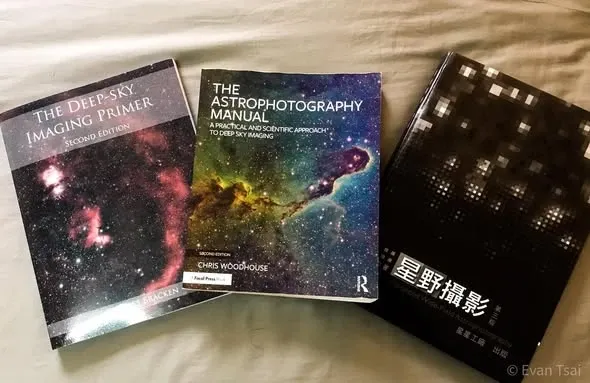
If you enjoy reading and have a keen interest in astrophotography post-processing, a few dedicated books can be great nourishment. Here I’ve gathered a few I’ve read or leafed through, along with photos of the inside pages for reference. One thing to note: most of these books are written in English, so they suit readers with a bit of English proficiency.
Three Entry-Level Recommendations Worth Considering
Let me start with an overview — if you have to pick, these three are worth prioritizing:
- Xingye Sheying 3 (星野攝影 3, a Chinese-language classic)
- The Astrophotography Manual (by Chris Woodhouse)
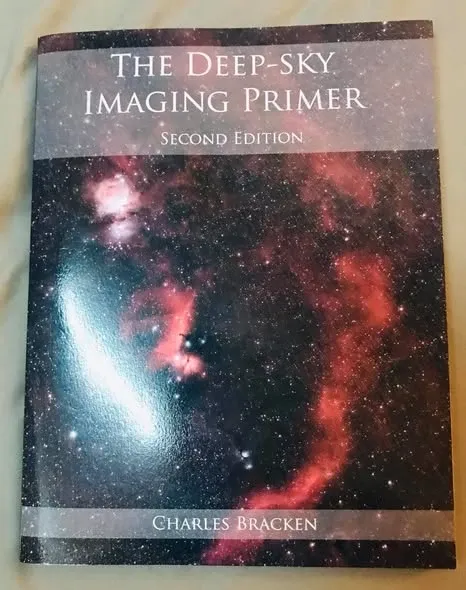
- The Deep-sky Imaging Primer II (by Charles Bracken)
Chinese-speaking readers will already know this one, so I won’t dwell on it. What I especially want to highlight are the second and third books, which contain a great deal of Photoshop and PixInsight workflow and explanation — very well suited to anyone interested in post-processing who can read English.
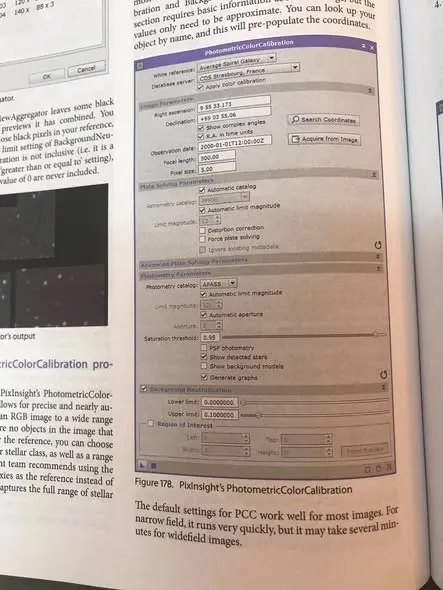
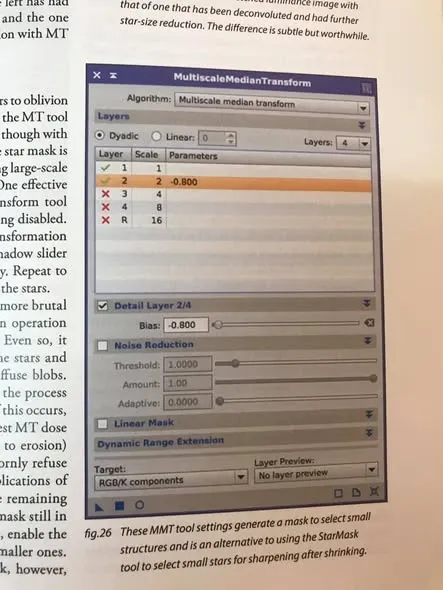
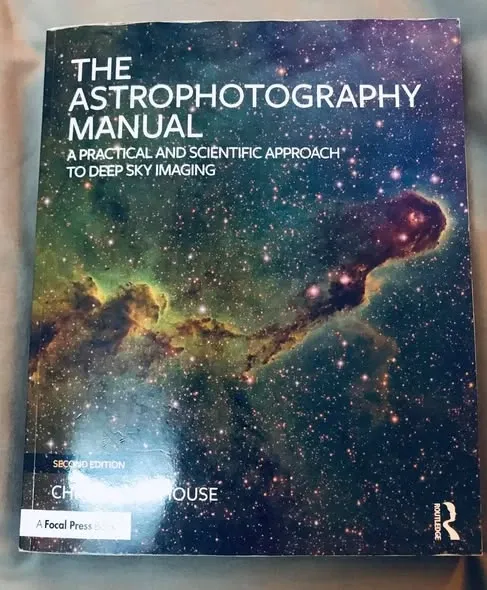
The Astrophotography Manual (Chris Woodhouse)
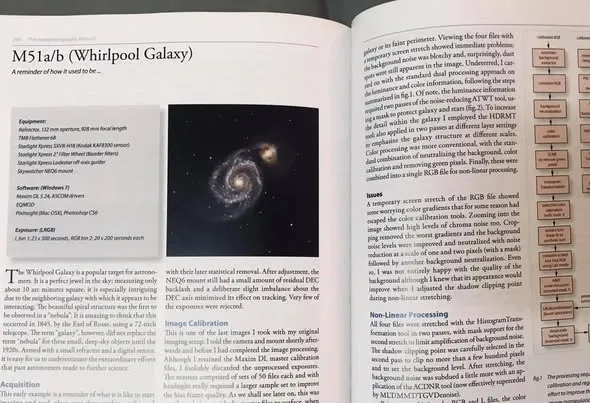
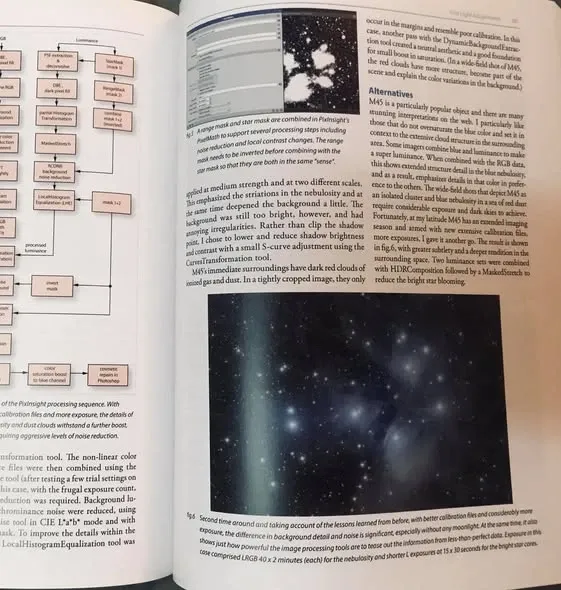
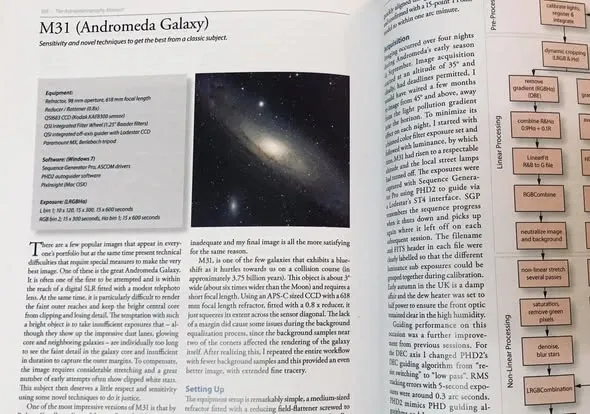
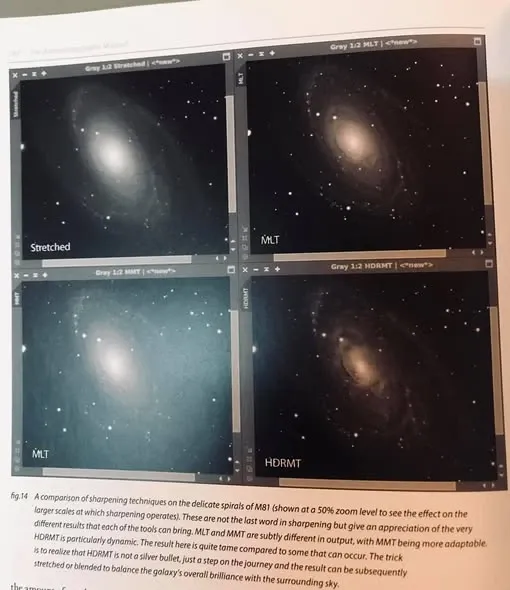
This one is well suited to people who want the book to have step-by-step workflow diagrams. Its scope is broad, covering galaxies, nebulae, comets, and narrowband; there’s plenty of text and plenty of figures, and every topic comes with the workflow diagrams beginners love most. I photographed a few of the inside pages for anyone interested.
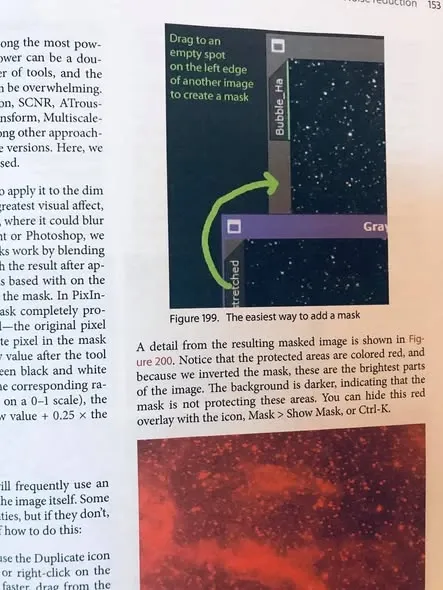
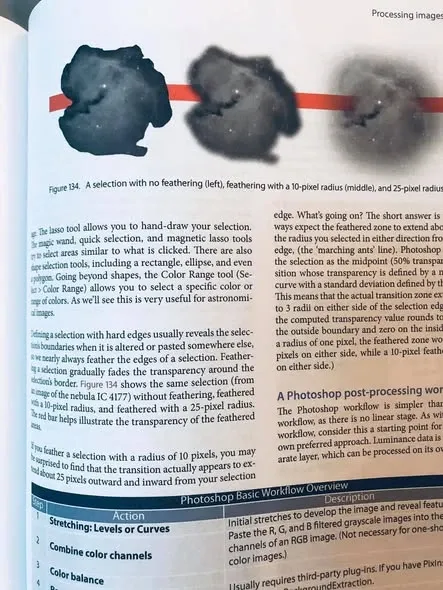
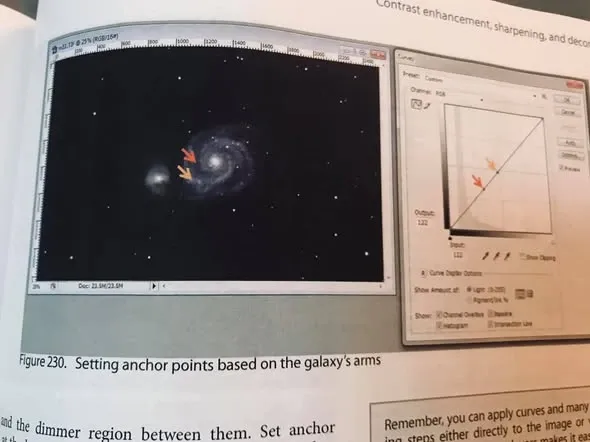
The Deep-sky Imaging Primer, Second Edition (Charles Bracken)
This one focuses more on explaining the procedures and principles of PixInsight and Photoshop. Its distinctive feature is that the same action is demonstrated in both software packages at once — teaching you how to adjust the curves and perform each operation, shown side by side in both programs. Again, I photographed some inside pages for reference.
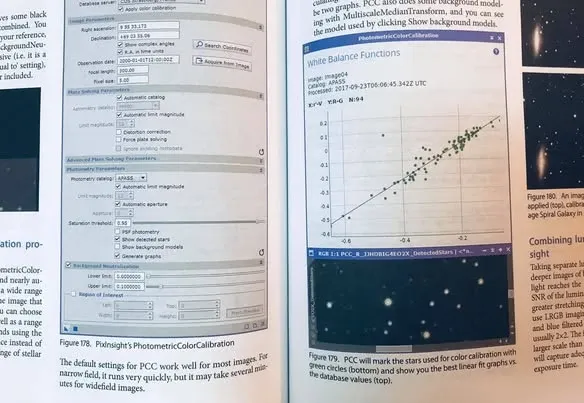
Inside PixInsight, Second Edition (Warren A. Keller)
This is a book dedicated to PixInsight; a new edition came out after the content was updated in 2018, teaching some basic PI processing procedures and scripts. I briefly owned it, but since I don’t read books much myself, I later sold it to another enthusiast.
Two small reminders: first, this book’s pages are on the small side and it won’t lie completely flat on a desk; second, when buying make sure to get the new edition and not accidentally end up with the first edition.
About R.B.A’s Dedicated PixInsight Book
The dedicated PixInsight book from R.B.A came in three versions at the time — English, Spanish, and Russian. On price, the English print-plus-digital version was about 55 US dollars (shipping extra for the print version), while the digital-only version was about 25 US dollars. Worth a look for interested enthusiasts as well.
That’s my book list. Whether or not to buy books really comes down to personal habit — some people learn just fine from videos, while others like to spread the workflow out on a book and read through it slowly. If you’re the latter, these should all come in handy.