FastIntegration: Registering and Integrating Large Numbers of Frames
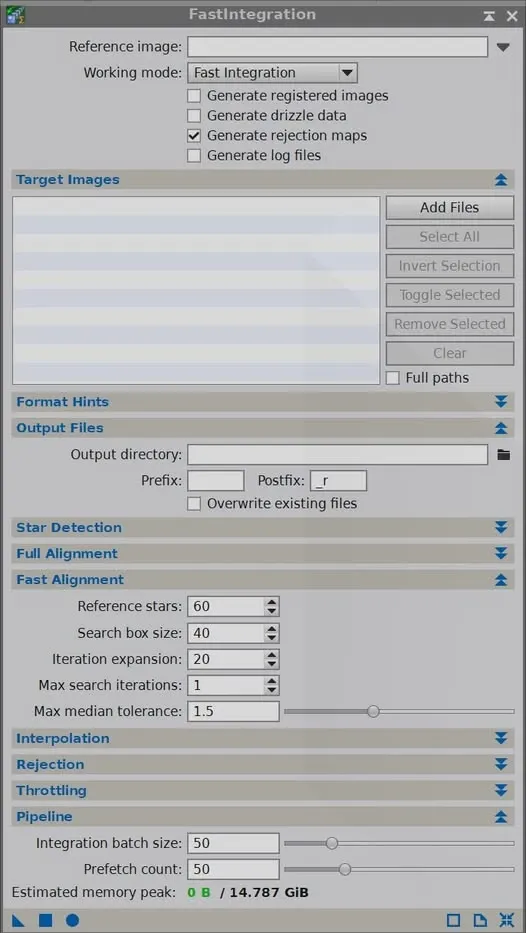
When you have not a few dozen but thousands of frames on your hands (for example, Lucky Imaging or Fast Imaging, where each single frame runs only a few hundred milliseconds to a few seconds), the traditional registration-and-integration workflow gets maddeningly slow. FastIntegration, added in PixInsight version 1.8.9-2, is designed for exactly this scenario.
What FastIntegration Is
FastIntegration was released alongside PixInsight 1.8.9-2 and is a registration and integration process designed specifically for Fast Imaging, a variant of Lucky Imaging (single-frame times of about 500ms to a few seconds), able to process thousands of frames at once. (The same version also incidentally improved processes and scripts like StarAlignment, ImageSolver, HDRMT, HDRComposition, WBPP, and AnnotateImage.)
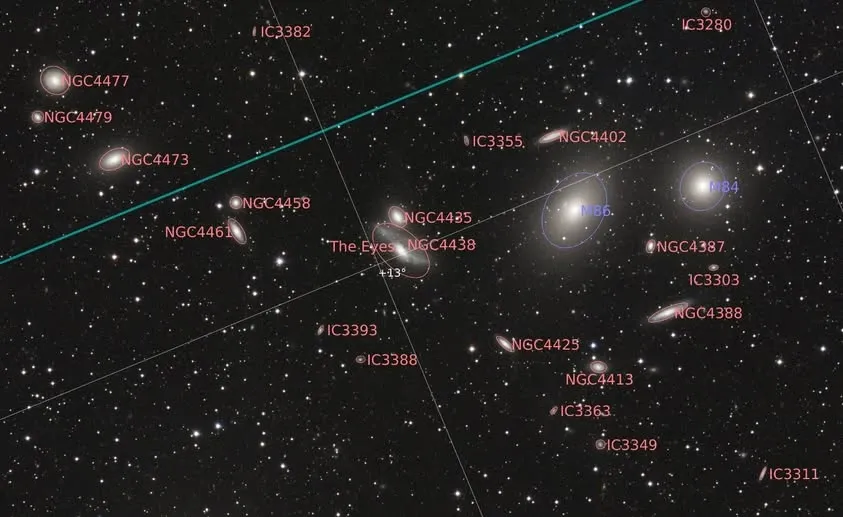
Its purpose is, after image calibration is complete, to register, reject, and integrate the frames. The key lies in its assumption: the differences between frames are all very small. Based on this assumption, it uses a faster algorithm for star registration; and when the fast algorithm fails, it can automatically fall back to the traditional registration algorithm. PI officially released a video demonstrating the complete workflow of taking nearly 900 frames from WBPP calibration all the way through to FastIntegration registration and integration.
An Extension: FFTRegistration for Registering the Moon and the Sun
Besides FastIntegration, there’s another handy script worth knowing when processing large numbers of special-target frames—the FFTRegistration Script.
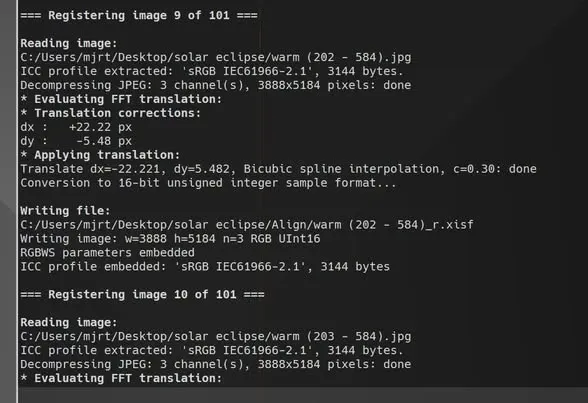
Through testing, FFTRegistration can register not only the lunar surface but also the Sun. I took 100 frames from the C2–C3 phase of the 2020 annular eclipse to test, and as long as you pick a good reference frame, it registers correctly. Friends who recently shot the North American total solar eclipse but didn’t know how to register a large number of solar frames can give this method a try.
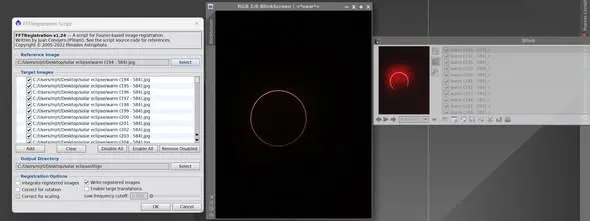
One thing to note: during the second and third contact phases (around C2 and C3; for an annular eclipse, around the start and end of annularity), because the solar disk is incomplete, some frames may fail to register. This is caused by the notched disk and is normal—just cull the frames that won’t register.