The MARS All-Sky Reference Database
MARS is PixInsight’s all-sky reference database, primarily for use with MultiscaleGradientCorrection (MGC). The reason MGC can make an accurate gradient correction even on an image blanketed with stars and nebulosity where no background can be found is exactly this: MARS provides the reference for “what this patch of sky is supposed to look like.” This article gathers the highlights of a few important MARS updates.
MARS DR1 1.1
This version had three main updates:
- The exposure time for the Orion region increased dramatically, from 68 minutes to 11 hours, significantly improving reference quality.
- The newly added sky regions cover Auriga and Monoceros.
- DR1 includes [O-III] data for all sky regions. This can correct images obtained with a monochrome camera plus narrowband filters, as well as images from OSC cameras using dual-narrowband filters.
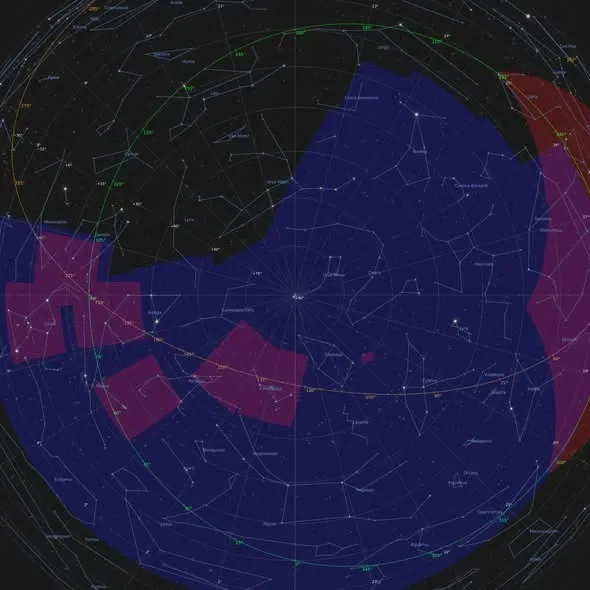
MARS DR2.18
DR2.18 is an even later update, likewise primarily for use with MGC. Its main updates include:
- Adding a large number of reference images, improving all-sky coverage so that more sky regions can use MGC directly.
- Improving reference-data quality, including background, color, and brightness correction, reducing stitching artifacts.
- Improving background correction for wide-field, mosaic, and multi-night images.
- Better preservation of real celestial structure, such as IFN, dark nebulae, and faint Hα, avoiding these real signals being mistaken for light pollution and removed.
One thing to clarify: DR2.18 did not modify the MGC algorithm itself; what it updated is the MARS all-sky database. In other words, the “reference data” got better, which in turn makes the gradient-correction results more accurate and more natural — especially well suited to shooting large-scale deep-sky objects.
Summary
The significance of the MARS database is that it provides MGC with a reliable “correct answer.” The higher the database’s coverage and the better its quality, the better MGC can distinguish what is a light-pollution gradient that should be removed from what is real celestial structure that should be preserved. So for those of you using MGC, remember to keep an eye on MARS version updates — the tool’s algorithm hasn’t changed, but the reference fed to it has gotten better, so naturally the results improve along with it.