Cooling a Gen 4 M.2 SSD: One Finned Heatsink, a 10°C Difference
Does an M.2 SSD really need any consideration for cooling?
Back when I used SATA SSDs, or PCIe Gen 3 M.2 SSDs, I never took cooling seriously—perhaps because the transfer speeds weren’t that high. But once you get into Gen 4, read/write speeds jump dramatically to 5,000–7,000 MB per second, and the enormous heat produced by the NAND and the controller chip causes the drive to slow down (thermal throttling), which in turn affects the lifespan of the storage NAND. Cooling—now this can’t be ignored.

A Single Finned Heatsink—7°C Cooler at Idle
After killing two SSDs from Taiwanese makers, I switched my system drive to a Gen 4 SSD from the first-tier brand Solidigm. But even installed in the M.2 slot wired directly to the CPU, using only the heatsink that came with the motherboard, the idle temperature stayed persistently high, reaching 51°C.
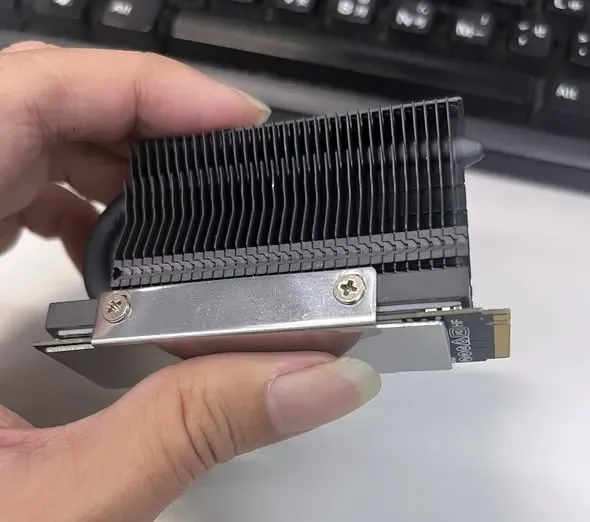
After switching to a passive finned heatsink, the idle temperature dropped noticeably by 7°C.

The gap is even more obvious under load. After running a CrystalDiskMark test that read and wrote 8 GB of data, the temperature difference between the two reached 10°C. Finally, I ran another stress test—continuously writing 1 TB of data—and the setup with the finned heatsink peaked at only 63°C.
Conclusion: Stay Away from Throttling Temperatures and You Get Full Speed
That figure of 63°C is well below the 75°C threshold at which a typical SSD begins to throttle. Within this temperature range, whether for everyday use or for running image-processing software, this SSD can steadily deliver its best performance.
A passive finned heatsink isn’t expensive, yet it buys a 7–10°C temperature drop; for a Gen 4 SSD, this is a very worthwhile investment.