RCW49
- Type
- Nebula
- Acquisition
- Planewave CDK17 · SBIG STXL-11002
- Integration
- 13.9h
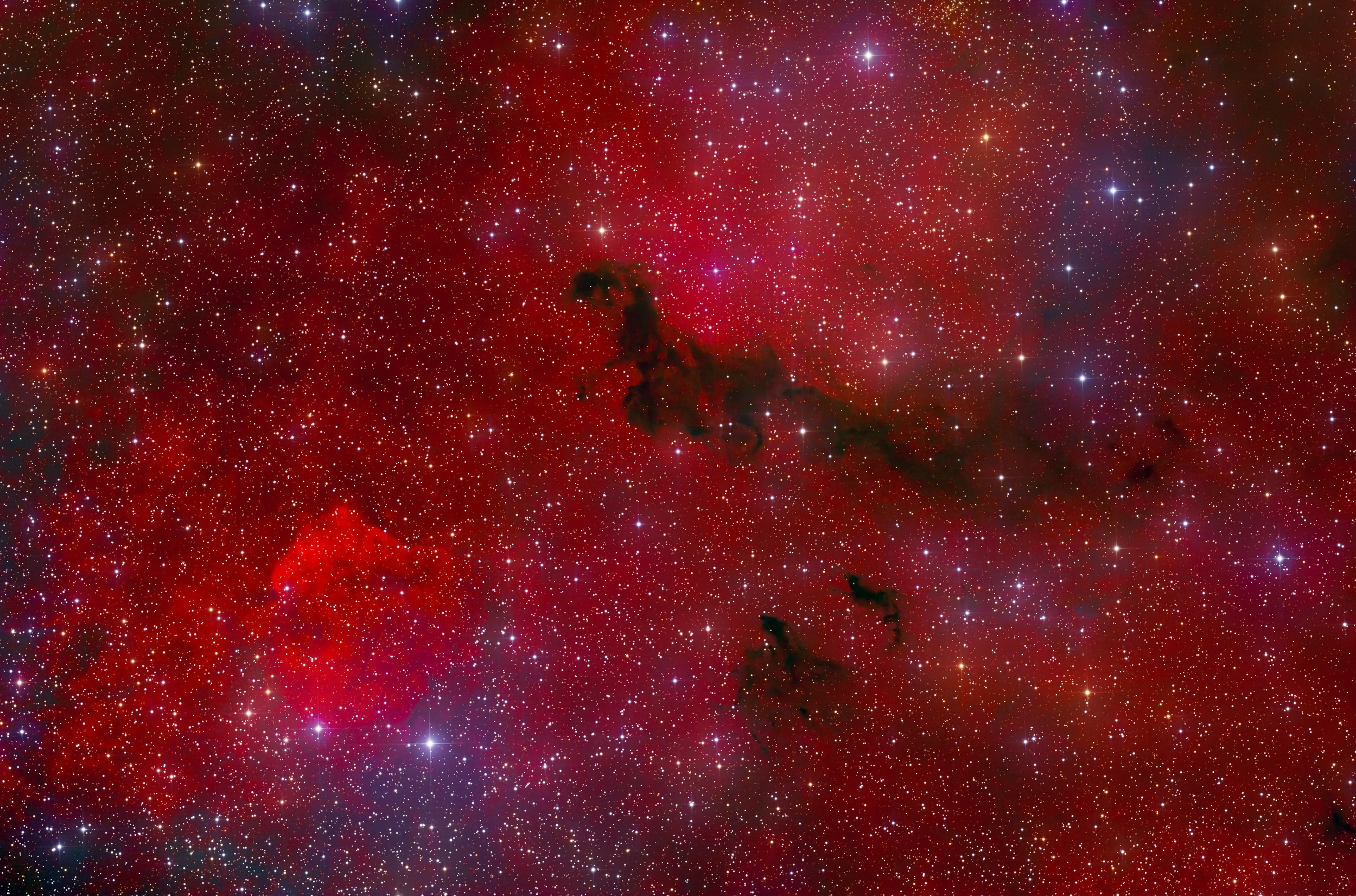
Located in the constellation Carina, the Whirling Dervish Nebula is one of the most spectacular stellar nurseries in our galaxy. It lies about 13,700 light-years from Earth and spans 300 to 400 light-years across, classified as a bright H II region. At its core resides the young star cluster Westerlund 2, containing roughly 3,000 stars. Among them are several massive O-type supergiants and two rare Wolf-Rayet stars. The intense radiation and stellar winds from these powerful stars continuously stir and shape the surrounding gas and dust, creating a dynamic, swirling structure that inspired its evocative name, the “Whirling Dervish.”
Beyond its breathtaking appearance, the nebula holds significant scientific value. Infrared observations have revealed a wealth of young stars hidden within the dust, with more than 200 still surrounded by protoplanetary disks. This indicates that planetary systems can form even in such a harsh and energetic environment. Thanks to its immense scale and powerful radiation, the Whirling Dervish Nebula is regarded as one of the brightest and most active H II regions in the Milky Way.